Joshua Tree Camping Guide: Best Campgrounds, Tips & Things to Do
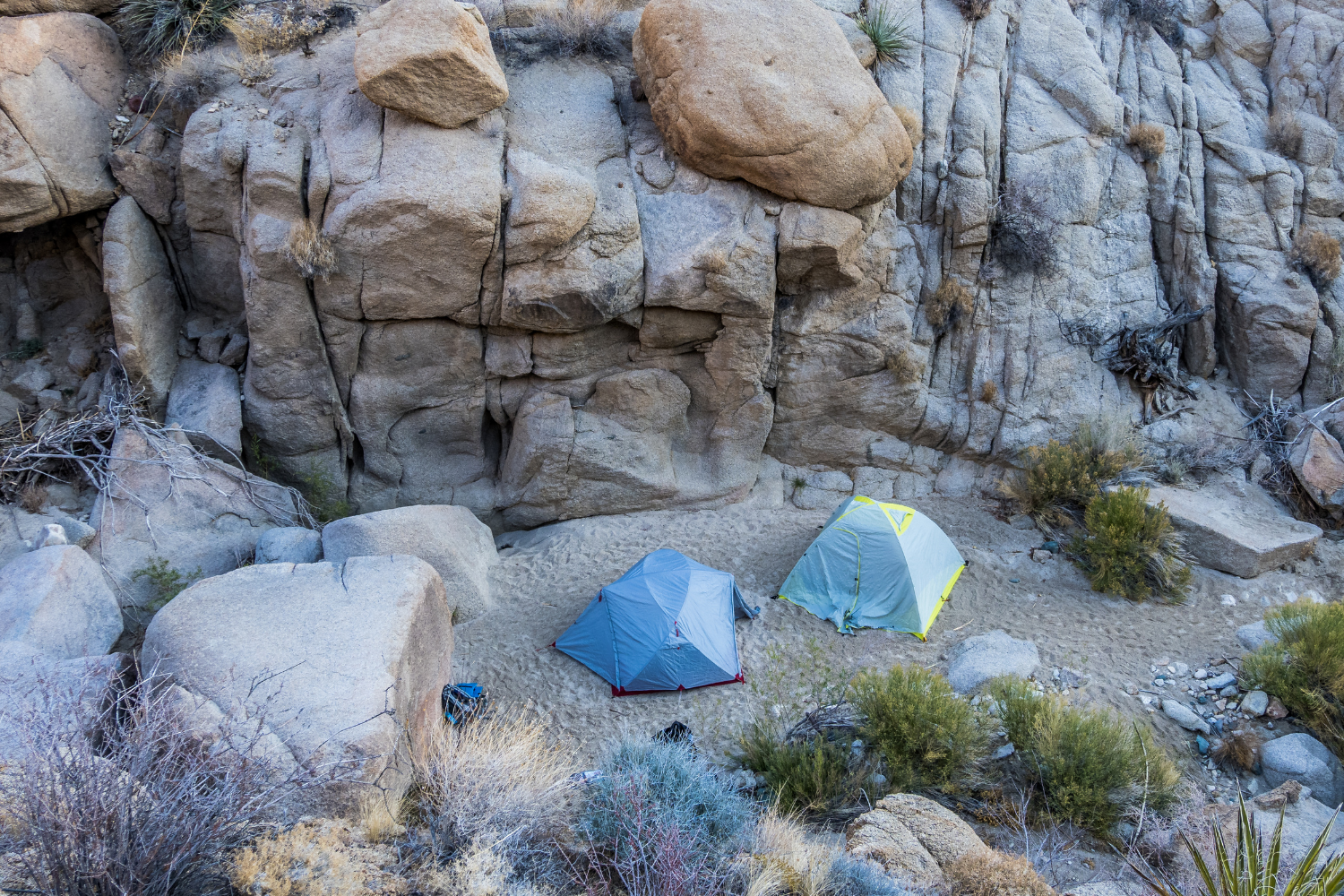
Camping in Joshua Tree National Park puts you right in the middle of one of California's most distinctive desert landscapes. Instead of driving out of the park at sunset, you can spend the evening beneath some seriously dark skies, wake up surrounded by Joshua trees and granite formations, and start hiking or climbing without making the drive back into the park.
But Joshua Tree camping takes a little more planning than your average campground stay. Campsites can be competitive during the park's busiest months, cell service is limited, and there are no restaurants, gas stations, grocery stores, or hotels inside the park. Water is also unavailable throughout much of the park's interior.
This guide breaks down where to camp in Joshua Tree, how the major campgrounds compare, what to know before spending a night in the desert, and some of the best ways to turn your campsite into a basecamp for exploring Joshua Tree National Park.
Quick Guide: Where Should You Camp in Joshua Tree?
There isn't one best campground in Joshua Tree National Park for every visitor. Where you should stay depends largely on what you want to do.
| Campground | Best For | Why Stay Here? |
|---|---|---|
| Hidden Valley | Climbers | Excellent access to Joshua Tree's famous climbing terrain |
| Ryan | Hiking + central location | Near Ryan Mountain and centrally located for exploring |
| Jumbo Rocks | First-time visitors + families | Huge rock formations and easy access to Skull Rock |
| Black Rock | Convenience | Near Yucca Valley with potable water available at the campground |
| Indian Cove | Climbers + quieter stays | Dramatic rock formations and extensive nearby climbing |
| Cottonwood | Exploring the southern park | Far from the busier northern areas and near Cottonwood Spring |
Short answer: For the classic Joshua Tree camping experience surrounded by rocks, Hidden Valley and Jumbo Rocks are strong places to start. Climbers should also consider Indian Cove, while Cottonwood makes more sense for travelers exploring the park's southern end.
Best Campgrounds in Joshua Tree National Park
Joshua Tree has several campgrounds spread across a large park, and location matters more than many first-time visitors realize. Choosing your campground based on the activities you actually want to do can save significant driving time once you're inside the park.
Hidden Valley Campground: Best for Climbers
If climbing is the centerpiece of your trip, Hidden Valley Campground puts you in the heart of some of Joshua Tree's best-known climbing terrain.
The campground has 44 sites surrounded by Joshua trees and granite formations at approximately 4,200 feet elevation. Sites include picnic tables, fire grates, and pit toilets, but there is no potable water at the campground. Hidden Valley is currently first-come, first-served and open year-round.
Its location makes it especially appealing if you want to spend your mornings climbing and your afternoons exploring the central portion of the park.
The downside? You're hardly the first climber to have that idea. First-come, first-served campsites in Joshua Tree are highly competitive during busy periods, particularly weekends and spring.
Best for: Climbers, boulderers, and visitors who want a classic Joshua Tree setting.
Ryan Campground: Best for a Central Basecamp
Ryan Campground sits near Ryan Mountain and provides a convenient jumping-off point for exploring the central portion of Joshua Tree.
That makes it a good option for campers who don't want their entire trip centered around one activity. You can hike, explore rock formations, climb, photograph the landscape, or head deeper into the park without starting from one of the gateway towns each morning.
Its open desert setting also makes for beautiful sunrises and nights beneath the stars.
Best for: Active visitors who want hiking, climbing, and general sightseeing within reach.
Planning tip: Campground operations and reservation availability can change, so check the current NPS campground information and Recreation.gov before basing your itinerary around a specific site.
Jumbo Rocks Campground: Best for First-Time Visitors
The name is pretty accurate.
Jumbo Rocks Campground is surrounded by the massive granite formations that many visitors picture when they imagine Joshua Tree. The campground itself feels woven into the rocks, making it an especially fun option for first-time visitors, photographers, and families who want interesting scenery without leaving camp.
It's also conveniently located near Skull Rock, one of the park's most recognizable formations.
Best for: First-time Joshua Tree campers, families, photographers, and anyone prioritizing scenery.
Planning tip: Desert temperatures can change dramatically after sunset. Even when afternoons feel warm, NPS recommends bringing appropriate layers and sleeping gear for cold nighttime temperatures, particularly during fall, winter, and spring.
Black Rock Campground: Best for Convenience
Black Rock sits on the northwestern side of the park near Yucca Valley.
Its location gives it a different feel from campgrounds deeper inside Joshua Tree, but that can be an advantage. Black Rock is one of the locations in the park where potable water is available, and its proximity to Yucca Valley makes getting supplies easier than from campsites farther into the park.
You'll also find hiking opportunities nearby, including trails through Black Rock Canyon.
Best for: Campers who want easier access to town, first-time desert campers, and travelers who value convenience.
Indian Cove Campground: Best for Climbing and Rock Formations
Indian Cove is tucked against a dramatic wall of granite formations on the park's northern side.
The area is particularly popular with climbers, and its setting can feel somewhat removed from the traffic moving through the park's primary roads. Potable water is available at the nearby Indian Cove Ranger Station, but don't assume you'll have water directly at your campsite.
One important planning distinction: Indian Cove doesn't connect directly to the main park road system from inside the campground. If your trip involves extensive sightseeing throughout the rest of Joshua Tree, account for the extra driving.
Best for: Climbers and visitors who are happy making their campsite and its surrounding terrain the focus of their stay.
Cottonwood Campground: Best for Solitude and the Southern Park
Cottonwood Campground sits near Joshua Tree's southern entrance, putting it well away from many of the park's busiest northern attractions.
That makes it useful for visitors entering from Interstate 10 or anyone who specifically wants to explore the Colorado Desert side of the park. Cottonwood Spring is nearby, and potable water is available at the campground.
The tradeoff is distance. If most of your itinerary revolves around Hidden Valley, Barker Dam, Keys View, or climbing areas farther north, Cottonwood can mean considerably more time in the car.
Best for: Visitors exploring the southern park, campers seeking some distance from the busiest areas, and travelers entering from I-10.
Do You Need Reservations to Camp in Joshua Tree?
For many Joshua Tree campsites, making a reservation is the safest way to avoid arriving without anywhere to camp. Reservations for reservable sites can be made through Recreation.gov up to six months in advance, subject to availability.
Hidden Valley, Belle, and White Tank are currently first-come, first-served. Those sites can be difficult to secure during peak periods. NPS says first-come sites are generally full nearly every weekend from September through May and often fill by Friday afternoon on weekends.
If you can't find a campsite inside the park, don't improvise by sleeping at a roadside pullout. Overnight roadside camping isn't allowed. NPS instead directs visitors toward legal camping on surrounding Bureau of Land Management land, private campgrounds, or lodging in nearby communities.
The takeaway: If your Joshua Tree trip depends on camping inside the park, reserve a site when possible rather than building your itinerary around finding an open campsite after you arrive.
When Is the Best Time to Camp in Joshua Tree?
For most visitors, fall through spring provides the most comfortable conditions for camping and daytime adventures in Joshua Tree.
Summer is a different proposition. NPS warns that extreme heat poses a serious safety risk, with temperatures exceeding 85°F between April and September and the hottest conditions typically occurring in July and August.
Spring also brings crowds. NPS identifies spring and holidays among the park's busiest periods, so comfortable weather doesn't necessarily mean easier camping.
For a trip built around hiking or climbing, don't just check the daytime high. Look at overnight lows, wind, and the forecast for the specific dates you'll be camping.
What to Know Before Camping in Joshua Tree
The desert rewards preparation. A few things that might feel like minor details elsewhere can become major problems here.
Bring more water than you think you'll need. There is no water available throughout the park's interior. NPS recommends carrying at least one gallon per person per day, with additional water kept in your vehicle.
Don't count on cell service. Reception is limited, so download maps before entering the park and consider carrying a physical map as backup.
Bring layers. Joshua Tree can be warm and sunny during the day and surprisingly cold after dark.
Stock up before entering. There are no gas stations, restaurants, grocery stores, or hotels inside Joshua Tree National Park.
Check the forecast and park alerts. Desert weather can change quickly, and flash flooding, strong winds, cold, or extreme heat can significantly change your plans.
Keep food and trash secured. Don't feed wildlife, and pack out everything you bring with you.
Use established campsites and roads. Camping regulations protect both visitors and Joshua Tree's fragile desert environment.
One more easy-to-miss rule: don't tie hammocks, slacklines, or other lines to Joshua trees or other vegetation. NPS prohibits attaching lines to vegetation, and slacklines aren't permitted in campgrounds.
What to Do While Camping in Joshua Tree
The biggest advantage of camping inside Joshua Tree is having more time to actually explore it. Once the day visitors leave, you're already positioned for an early hike, climbing day, sunset, or night beneath the stars.
Go Rock Climbing
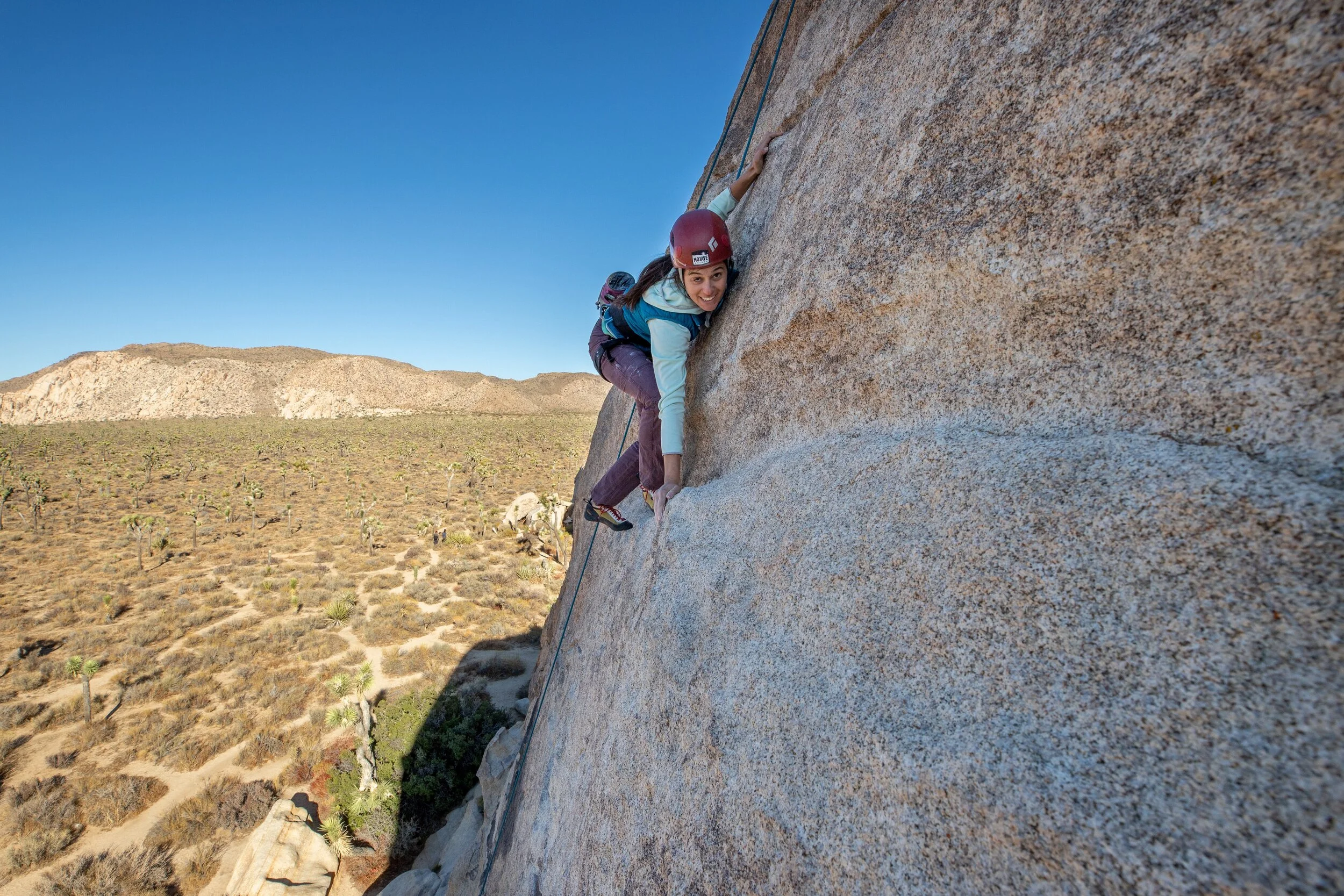
Joshua Tree isn't just a place that happens to have climbing. It's one of the world's major climbing destinations.
The park has more than 8,000 climbing routes and 2,000 boulder problems, with everything from crack and slab climbing to steep faces.
That variety is great if you're experienced. If you're new to outdoor climbing, however, the sheer number of options can make figuring out where to begin considerably harder.
Mojave Guides offers guided rock climbing in Joshua Tree for a range of experience levels, with private programs that can be tailored around your group's goals.
Explore Joshua Tree on Foot
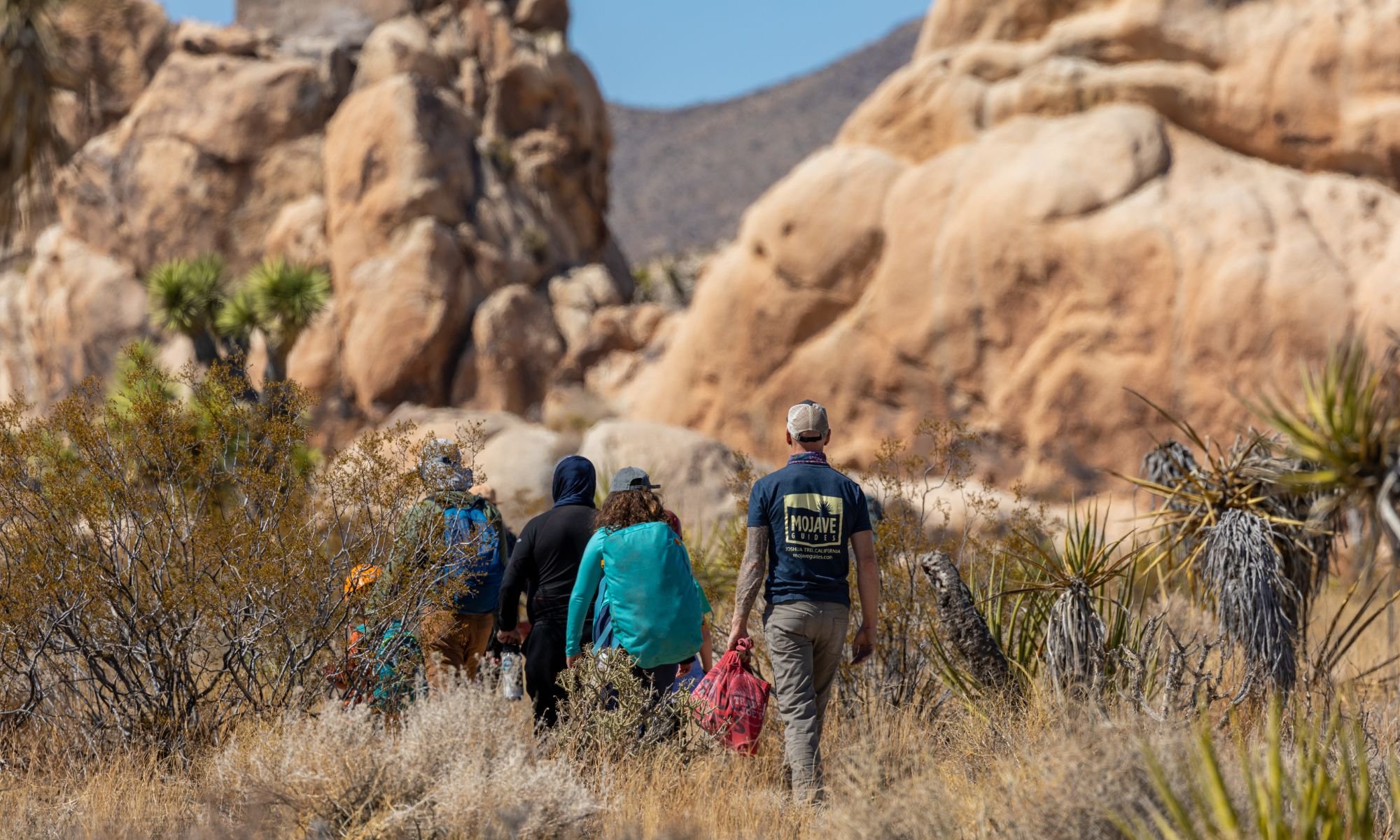
You don't need to tackle a major summit to have a great hiking day.
For a shorter outing, Hidden Valley Nature Trail offers a roughly one-mile loop through a rock-enclosed valley, while Barker Dam combines desert scenery with a glimpse into the area's human history.
For visitors looking for more options, see our guide to the best hikes in Joshua Tree National Park.
And don't underestimate a "short" desert hike. Limited shade, rugged terrain, heat, and poor cell service can make a few miles here feel very different from a few miles back home. NPS recommends carrying plenty of food and water, sharing your route and expected return time with someone, and avoiding the hottest hours during summer.
Mojave Guides also offers guided hiking in Joshua Tree for visitors who want to explore beyond simply following a trail from a parking lot.
Stay Up for the Stars
Camping gives you one major advantage over a day trip: you don't have to leave when the sun goes down.
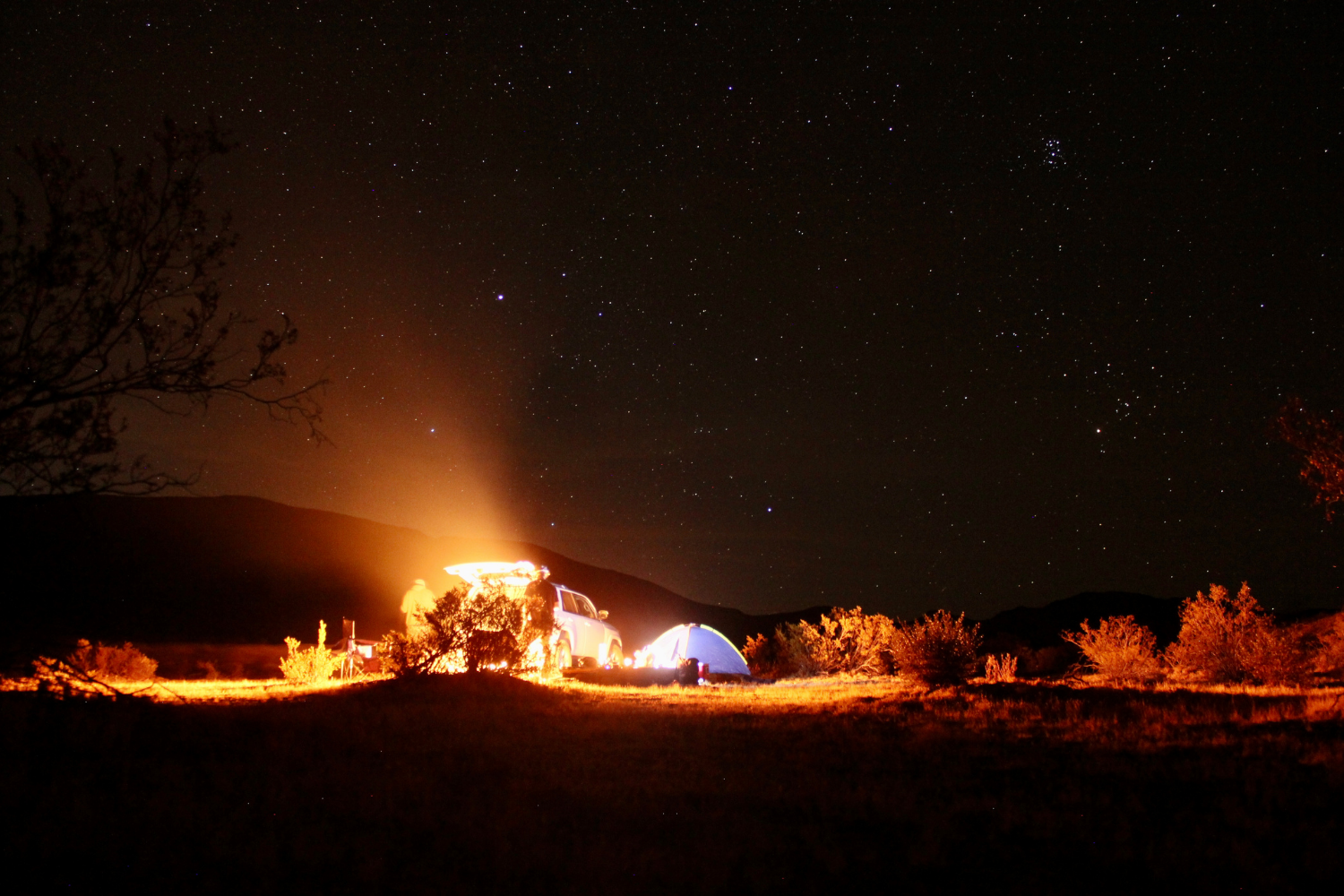
With relatively little artificial light across much of the park, Joshua Tree is well known for night-sky viewing. Give your eyes time to adjust, keep artificial light to a minimum around other campers, and bring an extra layer before settling in for the evening.
Watch for Desert Wildlife
Joshua Tree may look quiet at first glance, but the desert supports an impressive variety of wildlife.
Depending on the season, location, and time of day, visitors may encounter birds, reptiles, jackrabbits, coyotes, desert tortoises, and even desert bighorn sheep. Dawn and dusk can be particularly interesting times to slow down and watch.
Observe wildlife from a distance and never feed it. Around rocky areas, also be mindful of where you place your hands and feet. Rattlesnakes, scorpions, and black widows live in the park.
How Many Days Should You Camp in Joshua Tree?
Two to three nights is a good starting point for a first Joshua Tree camping trip. That gives you enough time to experience different parts of the park without trying to squeeze hiking, climbing, sightseeing, sunsets, and stargazing into one exhausting day.
A sample trip might look something like:
Day 1: Set up camp, explore nearby rock formations, and catch sunset.
Day 2: Spend the morning rock climbing or hiking, take a slower afternoon, and stay out for stargazing.
Day 3: Explore another section of the park before heading home or spend another day climbing.
The right length ultimately depends on what brought you here. Climbers can easily fill considerably more time.
Joshua Tree Camping FAQs
-
There isn't one campground that's best for everyone. Hidden Valley is particularly appealing to climbers, Jumbo Rocks offers the iconic boulder-filled Joshua Tree camping experience, Black Rock provides easier access to Yucca Valley, and Cottonwood works well for exploring the park's southern end. Choose based on the activities and areas you plan to visit.
-
Some Joshua Tree campgrounds accept reservations, while Hidden Valley, Belle, and White Tank are currently first-come, first-served. NPS warns that first-come campsites are highly competitive during weekends and the busy season, so reserving a campsite is recommended when possible.
-
No. Car campers must use designated campsites. Sleeping overnight in a vehicle along park roads or at roadside pullouts is prohibited. Backcountry camping has separate rules and requirements.
-
Don't assume there will be. There is no potable water throughout the park's interior. NPS currently lists potable water at Black Rock Campground, Cottonwood Campground, Indian Cove Ranger Station, the West Entrance, park headquarters, and the visitor center in Twentynine Palms.
-
Fall through spring generally offers more comfortable temperatures for camping and outdoor activities than summer. Summer heat can be dangerous, while spring and holidays are among the park's busiest periods. Always plan around current weather rather than the calendar alone.
-
Campfires are allowed only in designated campground fire rings. Visitors should check current fire restrictions and park alerts before their trip because conditions and restrictions can change.
-
Yes, with appropriate preparation. Campgrounds such as Jumbo Rocks put families close to the park's signature rock formations, and short hikes can make it easy to build an itinerary without committing to long desert treks. Families should be especially mindful of heat, sun exposure, water, uneven terrain, and cactus spines.
Make Your Campsite the Start of the Adventure
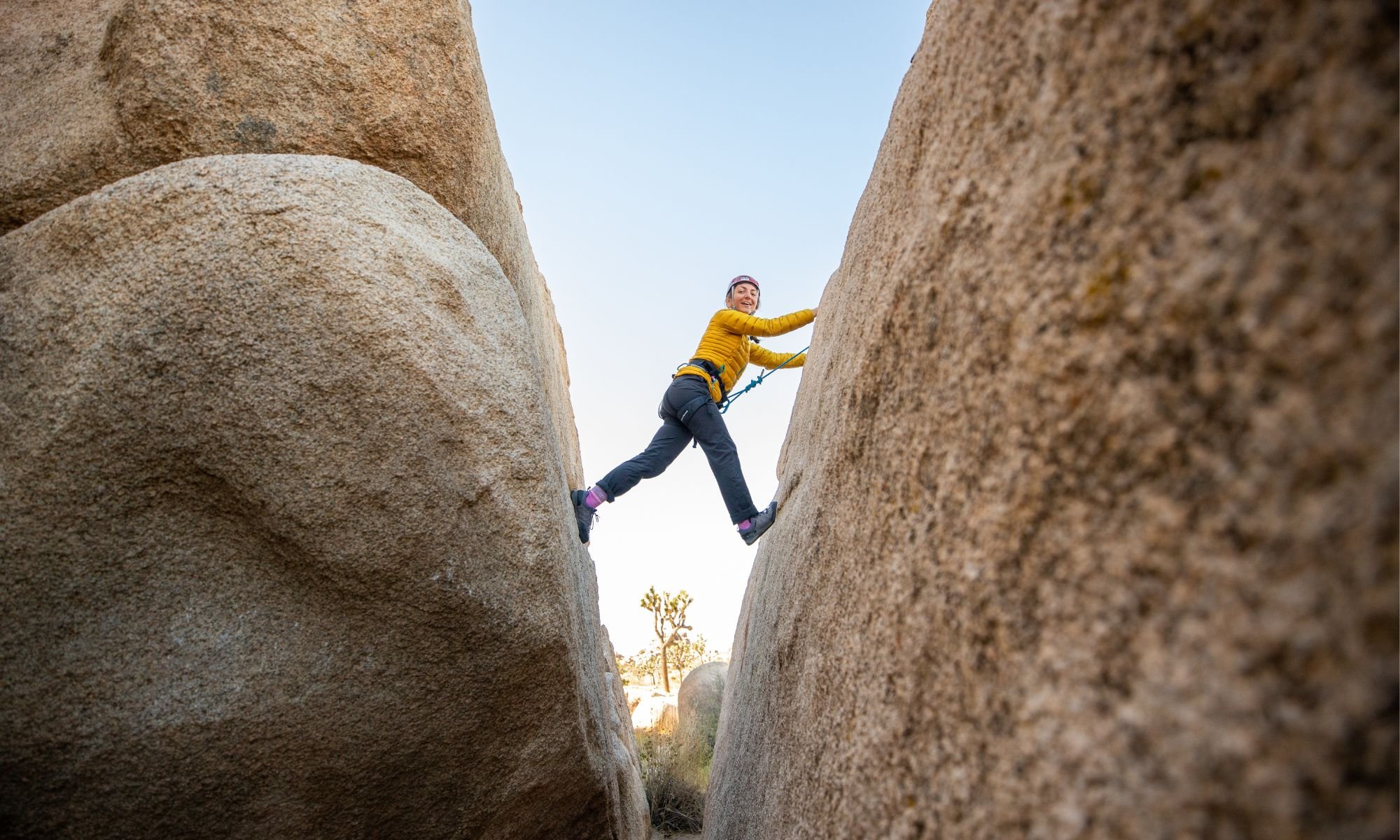
The best Joshua Tree camping trips aren't really about spending time at the campsite. They're about what having that campsite allows you to do.
Wake up early and hike before the crowds arrive. Spend a day learning to climb on Joshua Tree's granite. Explore somewhere you wouldn't have found on your own. Come back dusty, make dinner, add another layer as the desert cools down, and look up.
If you want to make climbing, hiking, rappelling, or exploring Joshua Tree's more adventurous terrain part of your camping trip, explore Mojave Guides' private guided adventures and build a day around your group's experience level and goals.