
Joshua Tree Wildlife: Animals You Might See & Where to Look
The rocks and Joshua trees might get top billing, but there's a lot more moving around this desert than you might realize.
Joshua Tree National Park is home to 57 species of mammals, 46 species of reptiles, more than 250 recorded bird species, and even two species of amphibians. Some Joshua Tree animals, including lizards, ground squirrels, ravens, and jackrabbits, are relatively easy to spot. Others, like desert bighorn sheep, tortoises, bobcats, and mountain lions, are much more elusive.
The trick to spotting Joshua Tree wildlife is knowing when and where to look. Desert animals organize much of their lives around temperature, water, shelter, and food, so the middle of a hot afternoon isn't necessarily your best wildlife-watching window.
Here's what lives in Joshua Tree, which animals you're most likely to encounter, and how to watch them without interfering with the wild place they call home.
What Animals Live in Joshua Tree?
If you only have 30 seconds, here's the quick answer.
Commonly Seen Animals
- White-tailed antelope ground squirrels
- Black-tailed jackrabbits
- Coyotes
- Kangaroo rats
- Lizards
- Greater roadrunners
- Ravens
- Red-tailed hawks
- Gambel's quail
More Elusive Wildlife
- Desert bighorn sheep
- Desert tortoises
- Bobcats
- Gray and desert kit foxes
- Mule deer
- Mountain lions
- Golden eagles
Don't assume that not seeing animals means they aren't around. Many desert mammals avoid the hottest parts of the day, while others spend daylight hours underground or hidden among rocks. NPS notes that dawn and dusk are particularly productive times because daytime and nighttime species may both be active.
Why Is Joshua Tree Wildlife So Different?
Joshua Tree sits at the meeting point of the Mojave and Colorado deserts, with elevations ranging from roughly 500 to more than 5,800 feet. Within the park you'll find mountains, valleys, sand dunes, rocky canyons, springs, and palm oases. That variety creates habitat for an unusually diverse collection of desert wildlife.
Living here requires some serious adaptations.
Staying Out of the Heat
One of the easiest desert survival strategies is simply avoiding the hottest part of the day.
Many Joshua Tree animals are nocturnal, meaning they're active at night, or crepuscular, meaning they're most active around sunrise and sunset. During summer, nighttime becomes particularly important as daytime temperatures can climb above 100°F.
Other animals retreat into burrows, rock crevices, or shade until conditions improve.
Surviving With Very Little Water
Water is scarce in the desert, and many animals have evolved ways to make every drop count.
Kangaroo rats are one of the coolest examples. They can survive without drinking water, extracting moisture from their food and producing metabolic water as they digest dry seeds.
Reptiles conserve water in different ways, including scales that reduce water loss and an ability to retreat underground when temperatures become extreme.
Understanding those adaptations also helps you know where to look. Time of day, temperature, elevation, vegetation, rocky shelter, and access to water can all influence which animals you might encounter.
Common Mammals in Joshua Tree
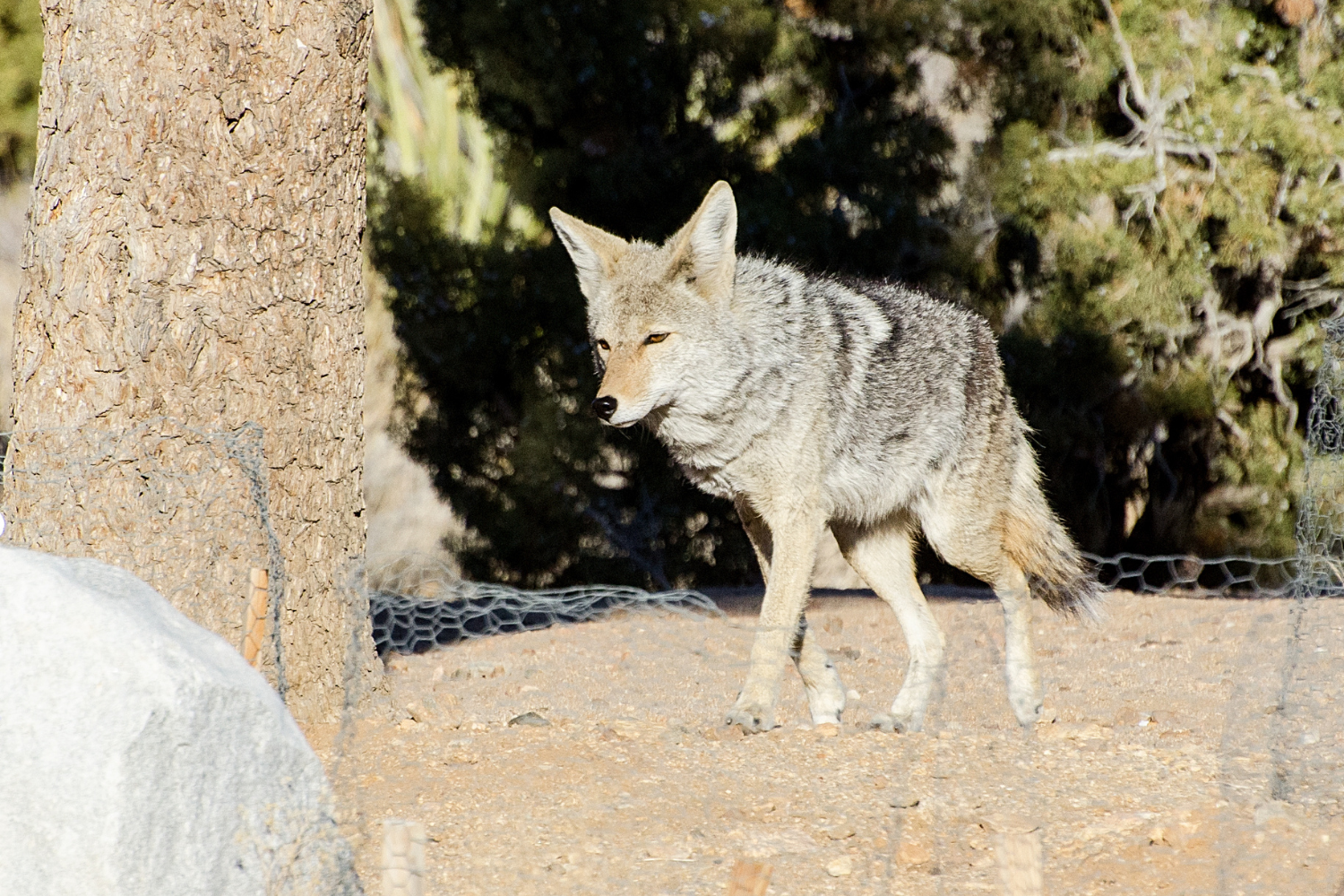
Coyotes
Coyotes are among Joshua Tree's more common large mammals and can be found throughout the park.
They're often active around dawn, dusk, and nighttime, although sightings can happen during the day. You may see one moving across open desert or even crossing a park road.
If a coyote approaches people, hangs around parking lots, or appears to be begging for food, don't feed or approach it. NPS asks visitors to report animals displaying unusual or human-habituated behavior.
Where to look: Open desert and throughout the park
Best time: Dawn, dusk, and nighttime
How common? Relatively common
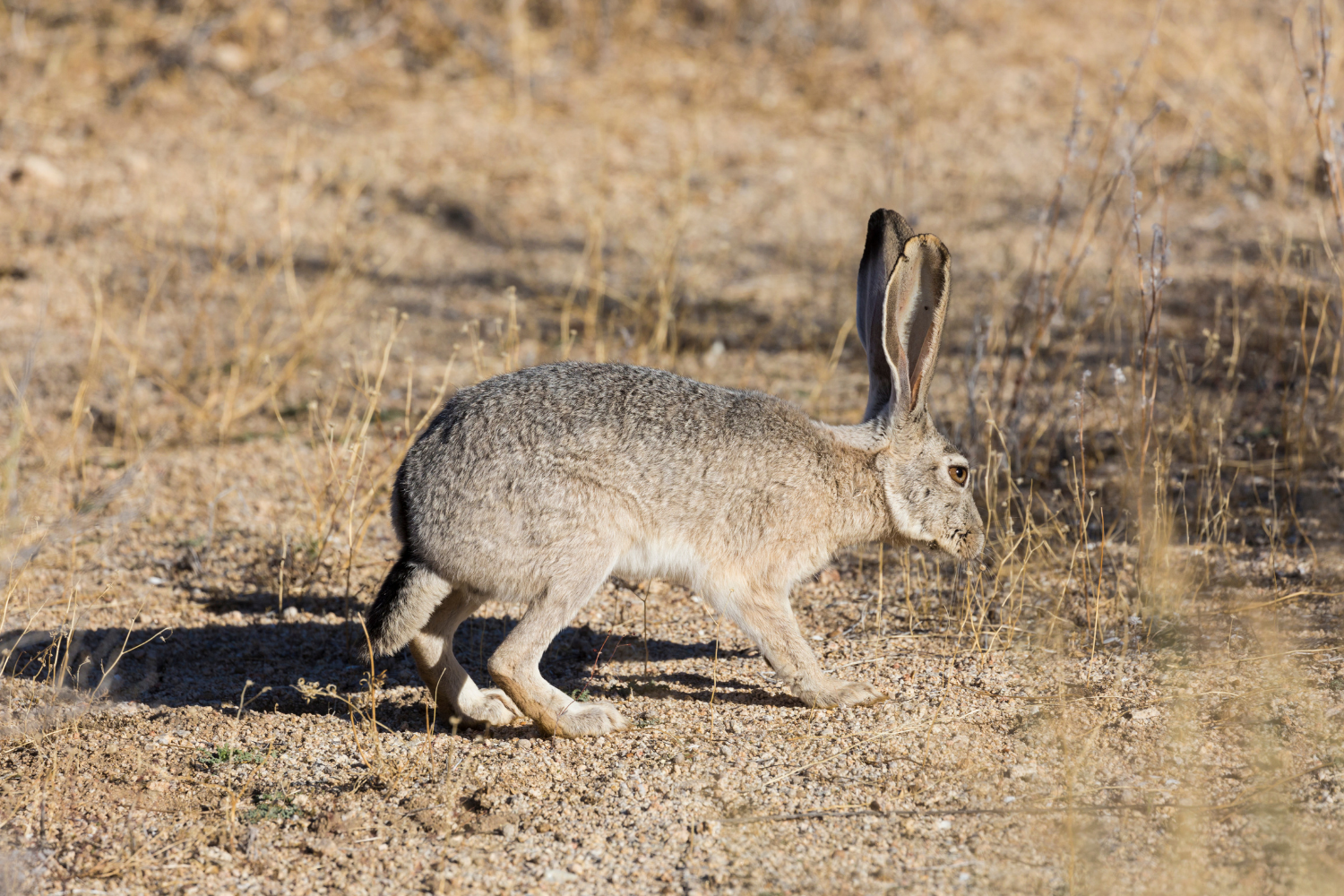
Black-Tailed Jackrabbits and Desert Cottontails
If you spend enough time exploring Joshua Tree, rabbits are much more realistic wildlife targets than a bighorn sheep or bobcat.
Jackrabbits and cottontails use desert vegetation for food and cover and are often easier to spot when temperatures are cooler.
Jackrabbits are recognizable by their long legs and enormous ears, while cottontails are smaller and more compact.
Where to look: Open desert, scrub, and areas with vegetation
Best time: Early morning and evening
How common? Common
Kangaroo Rats
You might not see one during a typical daytime visit, but kangaroo rats are one of Joshua Tree's best examples of desert adaptation.
These small nocturnal rodents can survive without directly drinking water. Their bodies are extremely efficient at conserving moisture, and they derive water from the seeds they eat.
They're a reminder that some of the desert's most interesting wildlife becomes active after most visitors have headed home.
Where to look: Desert habitat throughout the park
Best time: Night
How common? Common, but nocturnal
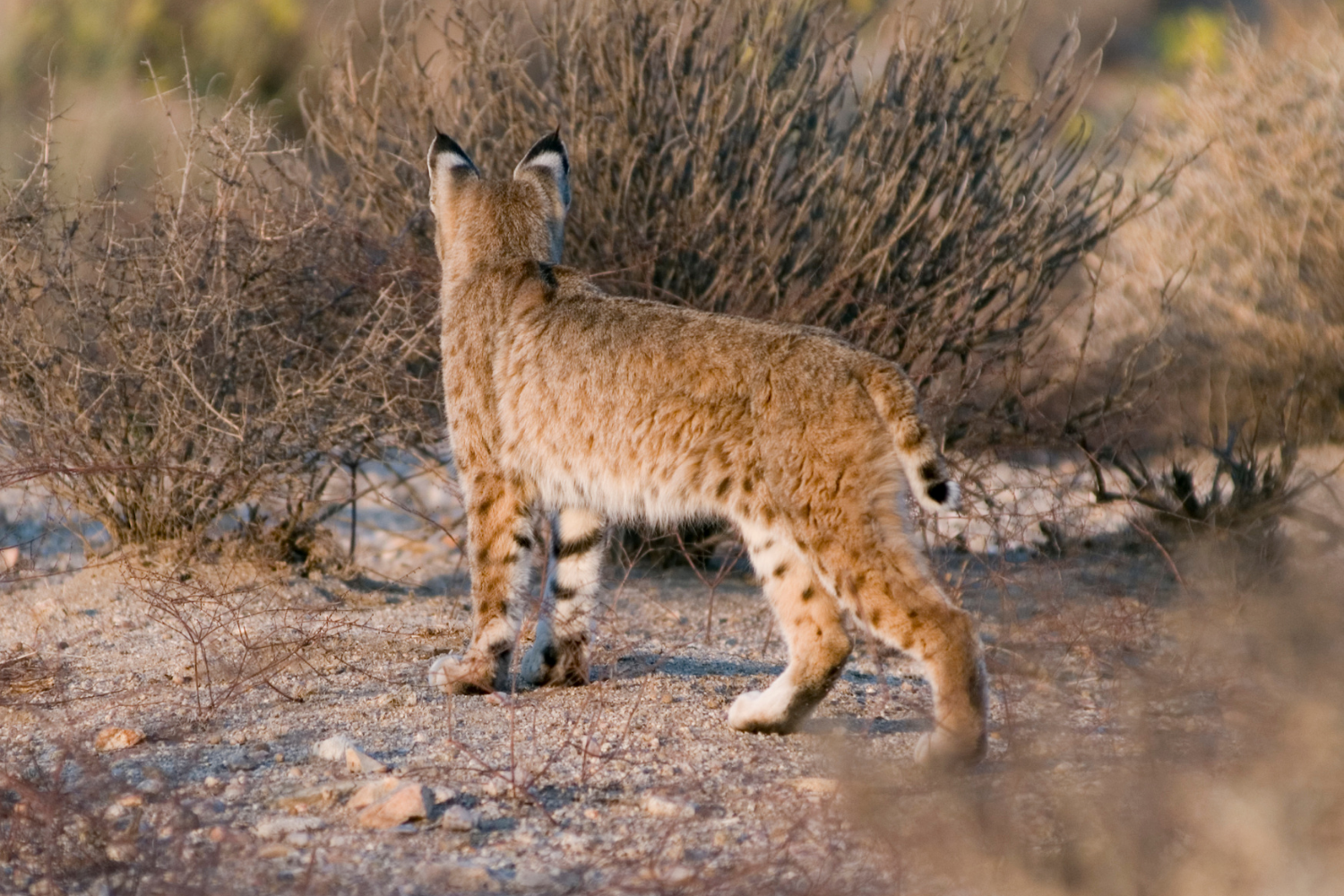
Bobcats
Bobcats live in Joshua Tree's rocky canyons and outcrops. NPS classifies them as common within that habitat, but that doesn't mean they're commonly seen by visitors.
They're quiet, well-camouflaged predators, so spotting one is more a matter of luck than something you should build an itinerary around.
Where to look: Rocky canyons and outcrops
Best time: Don't count on a sighting
How common? Present, but elusive
That distinction is important throughout Joshua Tree: an animal can have an established population in the park without being easy for visitors to see.
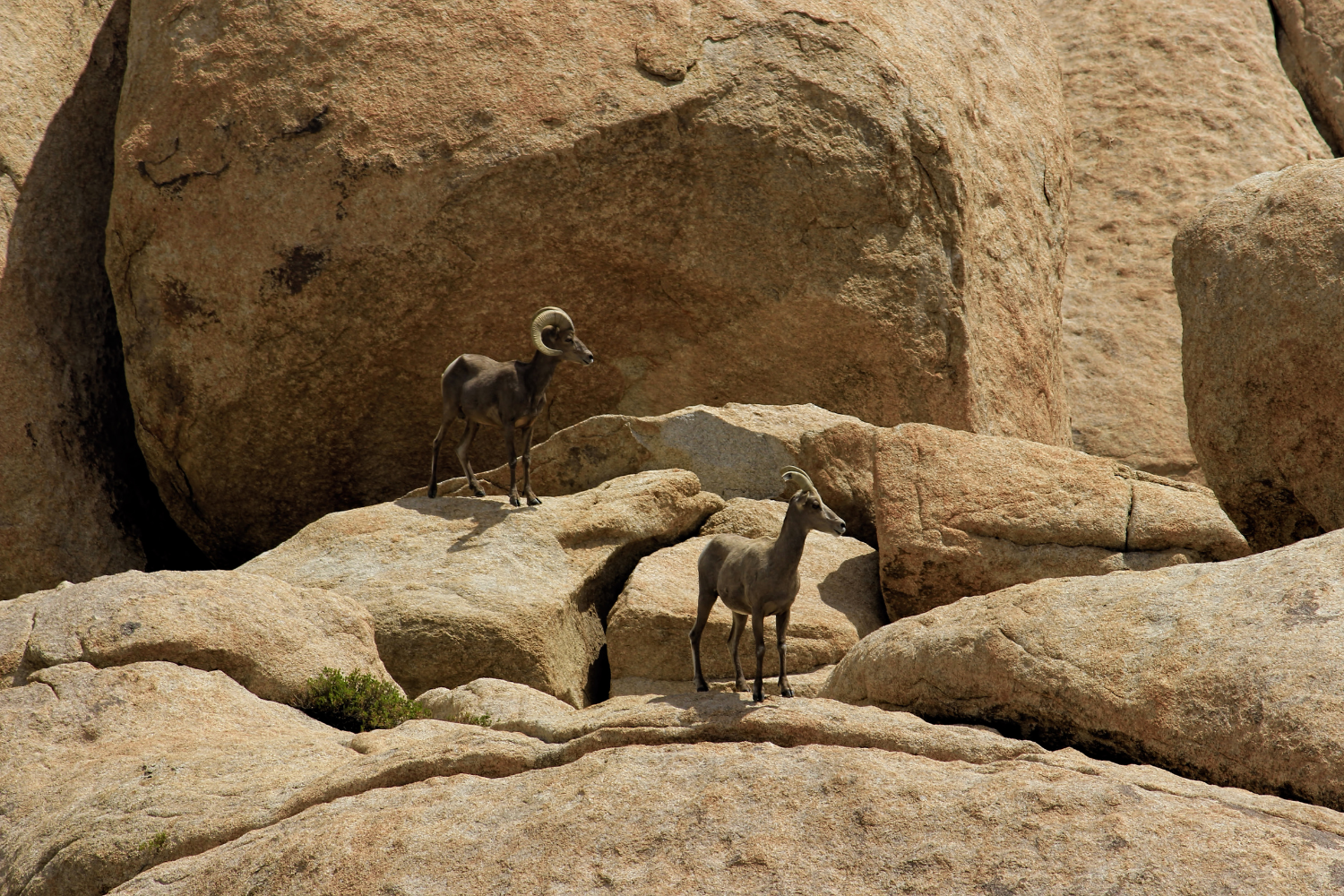
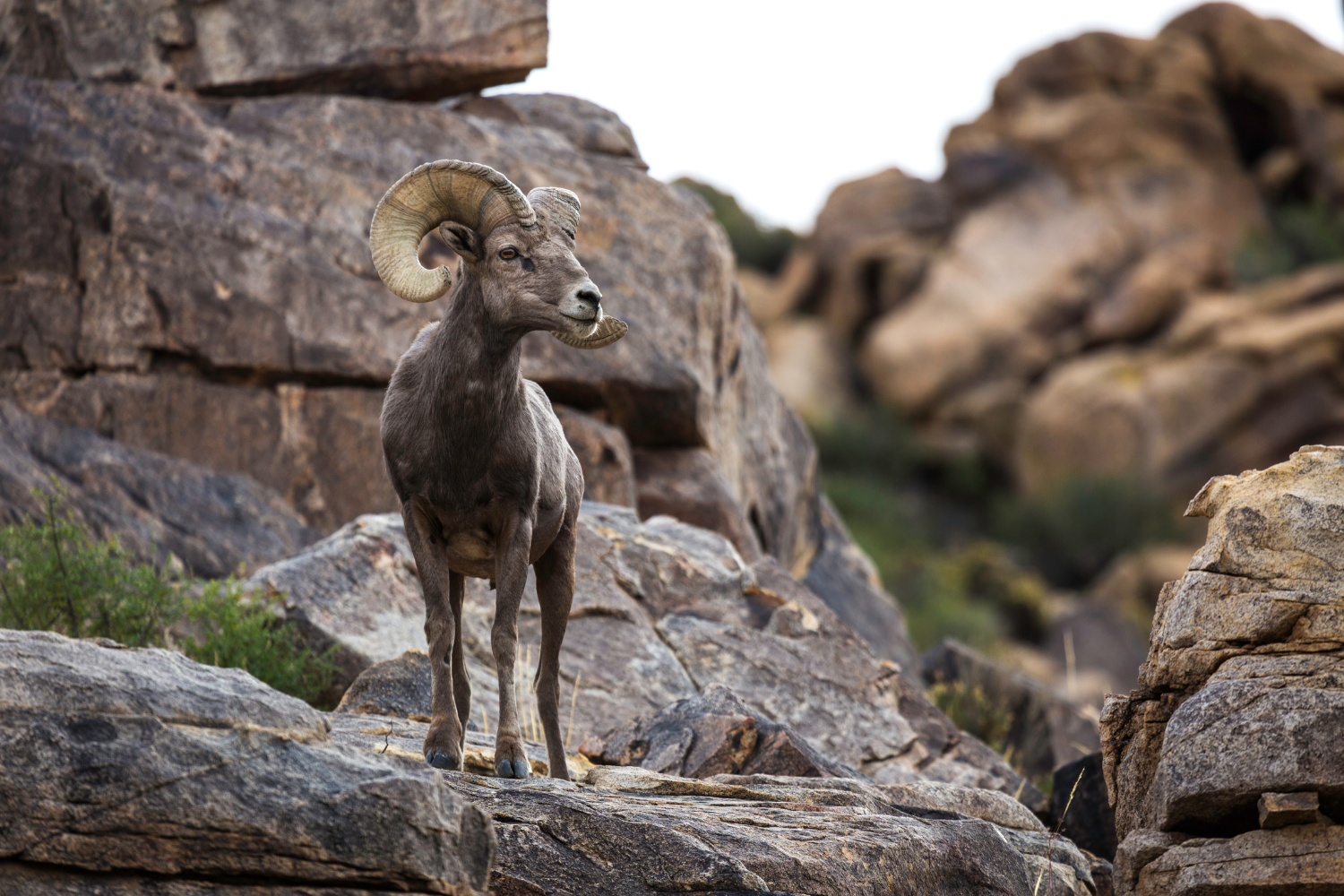
Desert Bighorn Sheep: One of Joshua Tree's Most Exciting Sightings
Seeing a desert bighorn sheep is special precisely because it isn't guaranteed.
NPS estimates that roughly 100 to 200 desert bighorn sheep live within Joshua Tree National Park. They favor mountainous terrain and rocky areas, and water plays an important role in where they move.
NPS specifically identifies rocky mountainous areas and locations near water sources such as Barker Dam as places where visitors might encounter them. Early morning and evening can be productive times to look.
If you do see one, give it plenty of room. Visitors should stay at least 75 feet away from bighorn sheep, and farther if the animal changes its behavior because of your presence.
NPS also asks visitors to report bighorn sightings because biologists monitor the park's population.
Where to look: Rocky mountainous terrain, canyons, and areas near water
Best time: Early morning and evening
How common? Uncommon
Important: Don't approach them for a better photo
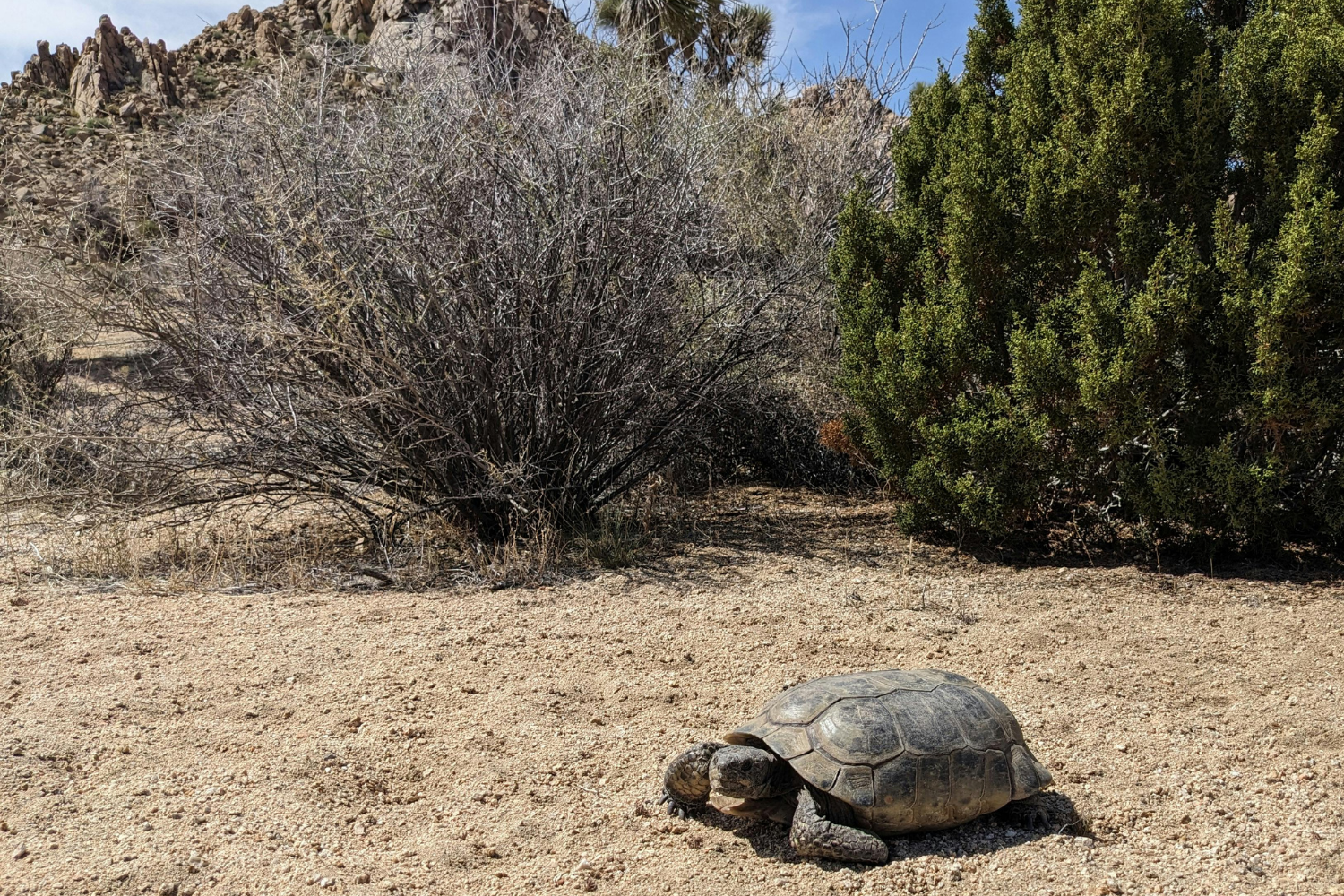
Desert Tortoises: Rare, Protected and Worth Giving Space
The Mojave desert tortoise is one of the park's most iconic animals, but seeing one requires luck.
Desert tortoises live throughout much of Joshua Tree, but they spend about 95% of their lives underground, which explains why many visitors never encounter one. Spring is generally the best season for sightings.
If you encounter a tortoise, do not touch, pick up, or harass it. NPS advises visitors to leave tortoises alone unless one is in imminent danger of being killed by a vehicle.
Where to look: Found broadly throughout the park outside the steepest terrain
Best time: Spring offers the best chance
How common? Rare to see
And if you do spot one, consider reporting the sighting to NPS. Desert tortoises are among the uncommon species park biologists track.
Lizards, Snakes & Other Joshua Tree Reptiles
If your wildlife wish list includes reptiles, your odds get considerably better.
Joshua Tree has 46 recorded reptile species, including lizards, snakes, and desert tortoises. Lizards are some of the most conspicuous animals in the park during daylight hours, particularly in spring.
Lizards
Look closely at rocks, boulders, trailsides, and sunny areas and there's a good chance you'll eventually notice something darting away.
Joshua Tree's lizards include desert spiny lizards, western banded geckos, chuckwallas, whiptails, and several others.
Because reptiles rely on environmental heat to regulate their body temperature, their activity changes significantly with temperature and season.
Snakes
Joshua Tree is also home to numerous snake species, including rattlesnakes and nonvenomous species.
Snakes generally aren't something you need to be afraid of, but they are something you should respect. Pay attention to where you put your hands and feet around rocks and vegetation, give any snake you encounter plenty of space, and never attempt to handle one.
Birdwatching in Joshua Tree
Birds are some of the most reliable wildlife to look for in Joshua Tree.
More than 250 species have been recorded in the park, thanks partly to Joshua Tree's position along an inland portion of the Pacific Flyway.
Year-round residents include:
Greater roadrunners
Cactus wrens
Rock wrens
Gambel's quail
Mourning doves
Verdins
Mockingbirds
Red-tailed hawks
American kestrels
Prairie falcons
Winter brings additional species, while spring and summer bring another wave of migrants and nesting birds.
Where Is the Best Birdwatching in Joshua Tree?
Water and vegetation are excellent places to start.
NPS specifically recommends:
Oasis of Mara
Cottonwood Spring
Barker Dam
Lost Palms Oasis
49 Palms Oasis
Queen Valley
Lost Horse Valley
Oases and water sources provide food, water, vegetation, and shelter that aren't as abundant across the surrounding desert.
If birding is a priority, don't only look at the ground for wildlife. Scan Joshua trees, cactus, rock formations, and the sky above you.
What Is the Best Time to See Wildlife in Joshua Tree?
Early morning and late afternoon into evening are generally the best times to look for wildlife in Joshua Tree. Those cooler periods overlap with activity from many crepuscular and nocturnal animals, while birds and reptiles can also be active during daylight depending on temperature and season.
But there isn't one perfect time for every species.
| If You Want to See... | When to Look | Where to Look |
|---|---|---|
| Bighorn sheep | Early morning or evening | Rocky mountains, canyons, areas near water |
| Desert tortoise | Spring | Across much of the park |
| Coyotes | Dawn, dusk, night | Open desert and throughout the park |
| Lizards | Daytime, especially spring | Rocks, trailsides and sunny areas |
| Birds | Morning | Oases, vegetation and water sources |
| Kangaroo rats | Night | Desert habitat |
| Jackrabbits | Morning and evening | Open desert and scrub |
Wildlife sightings are never guaranteed. Treat these as ways to improve your chances, not promises about where an animal will be.
How to Watch Wildlife Without Disturbing It
The best wildlife encounter is one where the animal gets to keep behaving like a wild animal.
NPS prohibits approaching, feeding, handling, capturing, or harassing wildlife in Joshua Tree. A useful rule is simple: if an animal changes its behavior because you're there, you're too close.
A few additional rules are particularly important:
Never feed wildlife.
Stay at least 75 feet from desert bighorn sheep.
Never touch or pick up a desert tortoise.
Don't use artificial lights to search for wildlife at night. Spotlighting is prohibited.
Keep pets leashed and remember that pets aren't permitted on park trails except the Oasis of Mara trail.
Never crowd an animal for a photograph.
Report sick, injured, rare, or unusually behaving wildlife to park staff.
Climbers: Wildlife Protection Applies to the Rocks, Too
This is especially relevant in a climbing destination like Joshua Tree.
Hawks, falcons, and owls sometimes nest on climbing routes. NPS may temporarily close active nesting areas to protect birds and their young. If you encounter an active nest while climbing, notify park staff rather than continuing through it.
See More of Joshua Tree With a Local Guide
You don't have to make wildlife the sole purpose of your trip to start noticing how alive the desert really is.
A day spent rock climbing, guided hiking, rappelling, or exploring Joshua Tree's canyons puts you in landscapes you might otherwise drive right past. Along the way, there's always the possibility of encountering some of the birds, reptiles, mammals, tracks, and signs that make the desert ecosystem so interesting.
Wildlife sightings can never be guaranteed, and that's part of what makes seeing something special actually feel special.
-
Commonly seen wildlife includes antelope ground squirrels, jackrabbits, coyotes, red-tailed hawks, ravens, and lizards. Many mammals are most active around sunrise, sunset, or nighttime, so what you see depends heavily on when you visit.
-
Yes. NPS estimates that approximately 100 to 200 desert bighorn sheep live within Joshua Tree National Park. They favor rocky mountainous terrain and may be seen near water sources, particularly during the early morning or evening. Sightings are uncommon and should never be expected.
-
Yes. Desert tortoises live throughout much of Joshua Tree National Park, but they spend approximately 95% of their lives underground. Spring generally offers the best chance of seeing one. Never touch or handle a desert tortoise.
-
Yes. Joshua Tree National Park is home to numerous snake species, including rattlesnakes and nonvenomous snakes. Snakes are generally less conspicuous than lizards. Give any snake you encounter plenty of room and never attempt to touch or move it.
-
Yes, but sightings are uncommon. NPS lists the California mountain lion among the park's mammals and describes its status within the park as uncommon.
-
Dawn and dusk are particularly good times for wildlife watching because daytime, nighttime, and crepuscular species may all be active around these transitions. The ideal time still varies by species, temperature, and season.
-
There is no single best location, but habitat is a useful guide. Water sources and oases can attract birds and other animals, while rocky mountainous areas are habitat for bighorn sheep. Barker Dam, Oasis of Mara, and Cottonwood Spring are among the locations worth exploring for wildlife and birdwatching.
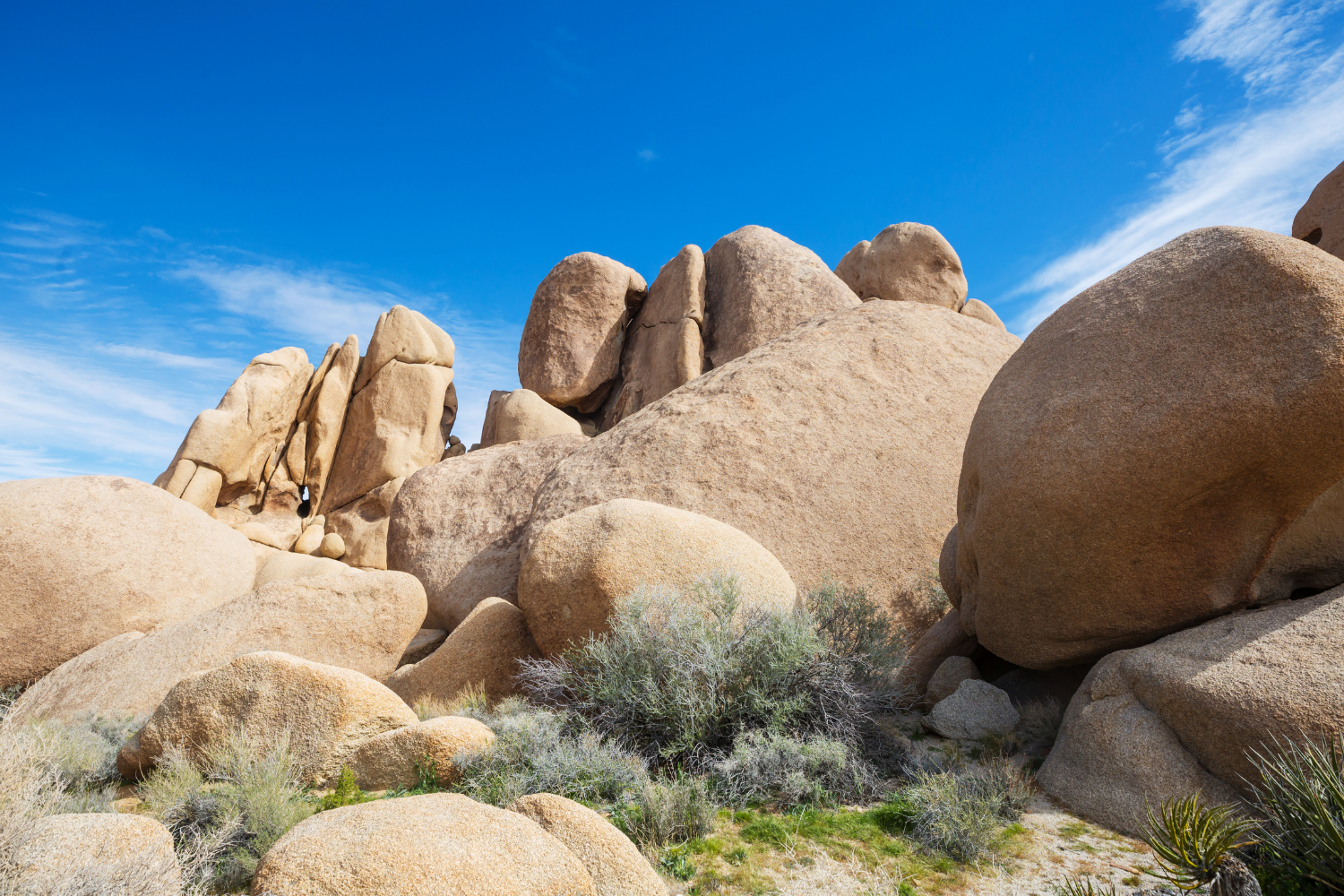
The Desert Isn't Empty. You Just Have to Know Where to Look.
At first, Joshua Tree can feel still. Spend a little more time here, though, and that changes.
A lizard darts across a warm boulder. Quail disappear into the brush. A roadrunner crosses the trail. Something moves across the desert just before sunset. If you're particularly lucky, you might look toward the rocks and find a bighorn sheep looking back.
That's part of what makes Joshua Tree wildlife so interesting. The animals here aren't staged attractions, and finding them isn't guaranteed. They're species adapted to a demanding desert environment, going about their lives whether anyone happens to be watching or not.
Take your time, pay attention, give wildlife plenty of room, and let the desert surprise you.